
STEM Innovation Olympiad 
Creativity is the secret sauce to science, technology, engineering, and math.
-Dr Ainissa Ramirez

Edition
5th
Class 1 to 10
About
STEM Innovation Olympiad
STEM pros are the ones building the robots, curing diseases, and creating apps we can't live without. From your morning coffee maker to life-saving meds, they're everywhere! With tech changing super fast, India's NEP 2020 calls for kids to master digital literacy, coding, computational thinking, and even AI, turning them into confident innovators ready for anything.
That's why SilverZone Foundation is thrilled to launch the 2nd edition of the SilverZone STEM Innovation Olympiad! It's all about Science, Technology, Engineering, and Maths (STEM) in a fun, real-world way that gets kids thinking deeply and solving problems like pros.
Key Benefits for Students:
- Sparks curiosity and sharp analytical skills early on—when kids' brains are like sponges —setting them up for lifelong success.
- Nails the basics in STEM Olympiad challenges, building a rock-solid path to top careers or college.
- Lets them compete not just with classmates, but kids worldwide—winning global challenges builds unbeatable confidence.
- Uncovers what they're great at (and what to tweak) through smart feedback.
- Fuels a real love for creating and inventing in STEM subjects
- Matches NEP 2020 perfectly, prepping them for a tech-filled future
Joining the SilverZone STEM Innovation Olympiad celebrates their effort, pushes them toward big STEM dreams, and shapes them into bold thinkers for tomorrow.
Key Features Of The Olympiad :
- The STEM Olympiad is conducted in a single level (Level 1) and is open to all students from Classes 1 to 10.
- Each class will receive a separate and class-specific question paper to ensure appropriate difficulty levels.
- All questions are objective-type (Multiple Choice Questions).
- There is no negative marking, encouraging students to attempt all questions confidently.
- The STEM Olympiad is conducted only in English to maintain a standardised assessment format and ensure clarity in technical terminology used across all classes.
The Olympiad is held once a year and is conducted during school hours to ensure student convenience and maximum participation. Each participating school can select one of the three proposed dates for conducting the Olympiad. All dates will have separate sets of question papers, ensuring exam integrity and flexibility in scheduling.
Test Paper Structure:
The language medium is English only. The examination is being conducted for all classes from 1st to 10th with the following details.
- For Classes 1-2: There will be 25 questions, and the duration will be 40 Minutes.
- For Classes 3-5: There will be 35 questions, and the duration will be 40 Minutes.
- For Classes 6-10: There will be 40 questions, and the duration will be 50 Minutes.
Detailed guidelines for conducting the test will be shared with the school along with the question papers. For grades 1st onwards, OMR answer sheets will be provided.
Registration of Students
The STEM Olympiad prospectus, along with registration forms, is sent to all schools currently registered with the SilverZone Foundation. Please note that the printed prospectus may not reflect the most recent updates. The latest information on syllabus, exam format, levels, and prizes is always available on our official website. We recommend referring to it for accuracy.
For New Schools:
Schools not yet registered with SilverZone may request a prospectus by writing to us at info@silverzone.org Once received, schools must return the completed registration forms by the specified deadline.
Important Note For Schools:
- Any school can become a registered centre for the STEM Olympiad. There is no fee required to register the school itself.
- For smooth coordination and exam feasibility, a minimum of 40 students per school is required to register for the STEM Olympiad.
- For any clarification regarding exam rules, syllabus, paper pattern, or registration process, schools may write to us directly at info@silverzone.org
Marking Scheme and Syllabus
Syllabus
SilverZone International STEM Innovation Olympiad (STEM) syllabus comprises Science, Technology, Engineering and Mathematics. STEM education and the application of technology empower every student to use their creativity, and it helps to develop their problem-solving skills.
Science
Science anchors STEM education (Science, Technology, Engineering, Mathematics), fueling innovation skills, research abilities, and critical thinking, essentials for STEM Olympiads success. It demystifies the physical world, revealing its forces, materials, and life processes to inspire real-world engineering.
- Uncover forces, materials, and living wonders that power everyday tech.
- Understanding of concepts like Gravity is essential for designing bridges, automobiles, spaceships, etc.
- Analyse chemical composition to choose ideal materials for skyscraper construction or tech gadgets, building problem-solving skills.
Many of our technologies have been developed using biomimicry. We observe how things work in the living world and then apply this knowledge to make technology for our convenience and meet the challenges our world is facing. For example, the flying of birds and insects gave us the idea to make flying machines like aeroplanes and helicopters.
Ultimately, science equips students with essential STEM skills like collaboration, critical enquiry, experimentation, exploration, and discovery and mastering it unlocks solutions to tomorrow's problems.
Technology and Engineering
Technology and engineering shape every corner of life, banishing tedious tasks and revolutionising work. From internet-powered communication and email to word processors, spreadsheets, presentations, databases, robots, and AI automation—these tools boost productivity like never before.
Coding is the backbone of technology and engineering as it powers artificial intelligence, data science, and almost every trending technology. Coding sharpens logic, reasoning, consistency, and algorithmic thinking for professional success.
Mathematics
Maths can be considered the fundamental language of the universe, with applications transcending all time and boundaries. Math sharpens problem-solving skills crucial for STEM education and STEM careers. It equips students to conquer challenges in science, tech, and engineering.
Ancient mathematics formulas still drive today's rockets, apps, and AI- proving math knows no boundaries. The very media we enjoy in the form of videos or games is a variation of ones and zeros tied together in such an intricate manner that thinking of life without it seems impossible. While science explores "what if," math provides a solid, practical base for experiments and breakthroughs.
Section A: Science
Chapters
- Plants, Living and Non Living Things, Animals, Food, Air and Water, Human Body.
Section B: Technology & Engineering
Chapters
- Introduction to Computer, Uses of Computer, Parts of Computer, Introduction to Artificial Intelligence, Intelligence Assessment with Logical Reasoning.
Section C: Mathematics
- Numbers and its Counting, Operation of Addition and Subtraction , Money, Time, Measuring Length, weight and Volume, Identifying Patterns, Visualizing Shapes.
Section A: Science
Chapters
- Animals; Plants; Food, Air and Water; Human Body; Our Universe.
Section B: Technology & Engineering
Chapters
- Section B (Technology & Engineering): Introduction to Computer, Types of computer, Uses of Computer, Parts of Computer, Working of Computer, Keyboard and Mouse, Introduction to Artificial Intelligence, Intelligence Assessment with Logical Reasoning.
Section C: Mathematics
- Knowing Numbers, Fundamental Operation of Numbers, Patterns, Uses of Numbers in Daily Life, Measurement, Identifying 2D and 3D Shapes.
Section A: Science
Chapters
- Understanding motion: Force and its impact; The magical world of planets, moons and stars; The three physical states of matter; Sensors of the human body; Kingdom of plants and animals.
Section B: Technology & Engineering
Chapters
- ( Information Technology )
Information Technology - Introduction to Hardware and Software, Usage of the Internet; Coding using ‘Scratch’ - Block-based Programming Language (Beginner), Introduction to Artificial Intelligence [AI vs Human Intelligence], Intelligence assessment with Logical Reasoning.
Section C: Mathematics
- Exploring Numbers
Splitting a Number; Daily Mathematics; Geometrical Shapes; Working on Data
Section A: Science
Chapters
- Forces and their applications
Force, effects of forces, different types of force.
- Energy and its different forms
Energy, different types of energy
- Our magical solar system
Our solar system, sun, planets
- The three physical states of matter
Solids, Liquids, Gases, Melting, Evaporation, Condensation, Freezing
- Kingdom of plants and animals
Different types of plants, Animals and their habitats
- Systems inside our body
Digestive systems, Respiratory system, Circulatory system
Section B: Technology & Engineering
Chapters
- Information Technology - More on Hardware and Software, Application of Internet and Security
- Coding using 'Scratch' - Block based Programming Language (Intermediate)
- Introduction to Artificial Intelligence [AI Smart Homes]
- Intelligence assessment with Logical Reasoning
Section C: Mathematics
- Working with Numbers
Addition, Subtraction, Multiplication and Division of Numbers
- Dividing A Whole
Applying Fractions
- Everyday Mathematics
Time, Money, Measuring Length, Mass and Capacity
- Understanding Geometrical Shapes
Geometrical Figures, Patterns
- Representing Data
Pictograph, Bar Graph
Section A: Science
Chapters
- Force, work & energy
Frictional force, Magnetic force, Gravitational force, Elastic force, Work, Energy
- The simple machines
Lever, Plane, Pulley, Wheel & Axle, Screw
- Light: The fastest thing
Light, Reflection, Transparency, Luminous & Non-luminous
- Forces of nature: natural calamities
Earthquake, Flood, Drought, Cyclone
- Imagine the unimaginable: Universe
Solar system, Planets, Constellations
- Systems inside our body
Skeletal system, Nervous system, Circulatory system
Section B: Technology & Engineering
Chapters
- Information Technology - Computer Fundamental, Windows OS, Introduction to MS-Office, Internet and communication
- Introduction and basics of Programming Language
- Coding using 'Scratch' - Block based Programming Language (Advanced)
- Artificial Intelligence [Domains of AI]
- Intelligence assessment with Logical Reasoning
Section C: Mathematics
- Number Sense and Numeration
Numbers and Their Operations, Factors and Multiples
- Understanding Fractions
Fractions and Decimals
- Ratio and Its Application
Ratio and Proportion, Percentage, Time and Distance,
- Geometrical shapes
Angle, Polygon and Circle, Perimeter and Area of Geometrical shapes
- Handling Data
Handling Data and its Representation
Section A: Science
Chapters
- Everyday science
Materials, Properties of materials, Grouping materials, Separation of components of mixture
- Story of Movement
Transport, measurement, Motion
- Light rays and their interesting behaviour
Light, Reflection, Shadow, Transparency, Luminous and Non-luminous objects
- Magic of magnet
Magnet, Poles of magnet, Magnetic and Non-magnetic materials, Compass
- Current and its path
Electricity, Electric circuits, Conductors, Insulators, Dry cell, Bulb
- Movement in living world
Human skeletal system, Joints, Gait of animals
Section B: Technology & Engineering
Chapters
- AI Introduction to AI, The Birth of AI, Understanding AI, Future of AI, New Technologies (Augmented Reality)
- Coding Introduction of Coding, Algorithms with Block Coding, Variables using Block Coding, Control with Conditionals, Loops using Block Coding
- Intelligence assessment with Logical Reasoning Series Completion, Blood Relation, Direction Sense Test, Geometrical Shapes, Mirror and Water Reflections
Section C: Mathematics
- Numbers and its Operations
Whole Numbers, Simplification of Numbers, Factors and Multiples, Fractions and Decimals
- Comparing Quantities
Ratio and Proportion
- Algebra
Algebraic Expressions
- Geometry
Lines and Angles, Elementary Geometrical Shapes
- Mensuration
Perimeter, Area
- Data Handling
Graphical representation of data
Section A: Science
Chapters
- Light and its interaction with objects
Rectilinear property of light, Laws of reflections, Object & image, Mirrors, Lenses, Dispersion of light
- Current and its effects
Electric components, Electric circuits, Heating effect of current, Magnetic effect of current, Electromagnet, Fuse
- Concept of Motion and Time
Uniform and Non-uniform motion, Graphical representation of motion, Time
- Understanding temperature
Heat, Flow of heat, Thermometers
- Sour, bitter and salty taste of substances
Acids, Bases, Salts
- Components of Environment
Soil, Air, Water, Forest
- The processes that make life possible
Nutrition, Human digestive system, Human respiratory system, Human circulatory system
Section B: Technology & Engineering
Chapters
- AI Introduction to AI, Application Area of AI, Ethics of AI, Future of AI, New Technologies [Virtual Reality]
- Coding Understanding Programming Languages, Variable in Real Life, Sequencing with Block Coding, Fun with Functions, Understanding Arrays and Collections
- Intelligence assessment with Logical Reasoning Series Completion, Geometrical Shapes, Blood Relation, Analogy and Classification, Coding & Decoding, Cubes and Dice
Section C: Mathematics
- Number System
Integers, Simplifying Arithmetic expressions, Fractions and Decimals, Rational Numbers, Exponents
- Algebra
Algebraic Expressions, Simple Equations
- Comparing Quantities
Ratio and Proportion, Percentage, Profit and Loss, Simple Interest
- Geometry
Lines and Angles, Triangles, Quadrilaterals, Solid shapes,Symmetry
- Handling Data
Mean, mode and Median, Bar graphs
- Mensuration
Perimeter, Area and Volume
Section A: Science
Chapters
- Some important physical quantities
Light, Electricity, Force, Sound
- Some natural phenomena
Electric charge, Electroscope, Lightening, Earthquake
- Important Materials
Metals, Non-metals, Fibres, Plastics
- World Beyond Earth
Stars, Galaxy, Constellation, Solar system, Satellites, Comets, Meteors
- Systems inside human body
Reproductive system, Circulatory system, Excretory system
Section B: Technology & Engineering
Chapters
- AI Introduction to AI, History of AI, Application of AI, Future of AI, AI Ethics and Bias
- Coding Conditionals in Details, Get Creative with Loops, Functions
- Intelligence assessment with Logical Reasoning Series Completion, Classification, Direction Sense Test, Coding & Decoding, Image Reflection
Section C: Mathematics
- Rational Numbers
Rational Numbers, Exponents, Square and Square Root, Cube and Cube Root
- Algebra
Algebraic Expression, Factorization, Linear Equation
- Geometry
Convex and Concave polygon
- Ratio and its Application
Direct and inverse proportions, Percentage,Discount and Taxes, Compound Interest
- Mensuration
Surface area and volume of Cube, Cuboid and Cylinder
- Handling Data
Introduction to graphs, Line graphs, Pie Chart, Probability of an event
Section A: Science
Chapters
- Chemical composition of our physical world
Matter, Metals, Non-metals, Metalloids, Mixture, Atoms, Molecules
- Force & Motion
Motion, Displacement, Acceleration, Equations of motion, Force, Newton’s law of motion
- Gravitation
Universal law of gravitation, Free fall, Pressure, Buoyancy
- Work & Energy
Work, Forms of energy, Conservation of energy, Power
- Sound
Sound, Propagation of sound, Types of waves, Human ear
- Cell and Tissues
Cell, Cell organelles, Tissues, Plant tissues, Animal tissues
Section B: Technology & Engineering
Chapters
- AI Introduction to AI, AI Project Cycle, Neural Networks
- Coding Coding with Python - Intermediate
- Intelligence assessment with Logical Reasoning Series Completion, Blood Relation, Syllogism, Inserting Missing Number, Figures Sequence
Section C: Mathematics
- Rational Numbers
Irrational Numbers, Real Numbers and their Decimal Expansions, Operation on Real Numbers, Laws of Exponents for Real Numbers
- Algebra
Polynomials in one variable, Zeros of a polynomial, Factorization of polynomials, Algebraic Identities
- Linear Equation and Coordinate Geometry
Linear equation in two variables, Solution of Linear equations, Coordinate geometry
- Geometry
Lines and angles, Triangles, Quadrilaterals, Circles
- Handling Data
Bar graphs,Histogram,Frequency Polygon
- Mensuration
Surface Area and Volume
Section A: Science
Chapters
- Chemical elements and their properties
Metals, Non-metals, Metallurgy, Carbon, Compounds of carbon
- Life Processes
Nutrition, Modes of nutrition, Respiration, Transportation, Control and coordination
- Light and Image formation
Reflection, Mirror formula, Magnification, Refraction, Lens formula, Human eye
- Flow of electrons and magnetism
Electricity, Electric potential, Ohm’s law, Combination of resistances, Electrical energy, Magnetism, Magnetic field lines, Electromagnet, Electric motor, Electric generator
- Energy and its sources
Renewable and non-renewable sources of energy, Fuel
Section B: Technology & Engineering
Chapters
- AI Foundational Concepts of AI, Understanding AI Project Cycle, Computer Vision and Evaluation
- Coding Coding with Python - Advance
- Intelligence assessment with Logical Reasoning Direction Test, Venn Diagram, Logical Sequence, Mathematical Operations, Coding & Decoding
Section C: Mathematics
- Real Numbers and Number Series
Real numbers and its representation on Number Line, Laws of Exponents, Arithmetic Progression
- Polynomials
Polynomials, Pair of Linear equations in two variables, Quadratic equation, Cartesian Coordinate System
- Geometry
Triangles, Similar figures, Similarity of Triangles, Areas of Similar triangles, Circles, Tangent to a circle
- Trigonometry and its Application
Trigonometry, Height and Distance
- Mensuration
Surface Area and Volume
- Statistics and Probability
Mean, Mode and Median of grouped Data, Probability of Events
Raw Score Calculation
The raw score is computed by multiplying each correct answer by its corresponding base marks and summing the results. In mathematical terms: Raw Score = SUM (correct answer × subsequent base Marks).
Total Marks Calculation
Total Marks are determined by adding the raw score to the sum of the weightage of correct answers. Each question carries an additional weightage, starting from .0001 and increasing incrementally (.0002, .0003, and so forth). For instance, Question No. 1 has a weightage of .0001, Question No. 2 has .0002, and so on. This weightage is utilized to resolve ties when calculating Class/Zonal/Olympiads ranks.
Rank Structure:
Class Rank
This encompasses all students from various sections/divisions of the same class within the same school.
Olympiad Rank
This encompasses all students from India and abroad belonging to the same class.
Important Notes:
Each winner is entitled to one award per exam, receiving the higher-level award only. For example, international top three rank holders will receive awards based on their international ranks, and any awards based on their Zonal ranks will be passed to the next rank holder. Similarly, if a Zonal award winner also qualifies for a class award, the class award will be given to the next rank holder.
Sample Papers
Sample Question Papers
The detailed Syllabus and Sample Test Paper are provided in this website, click the following links to download the Syllabus and Sample Test Paper class wise. For Books please contact, School Coordinator or book your order online now.
Prizes
International Olympiad
Rank Awards

1st Olympiad rank
The 1st International Olympiad rank holder in each class will receive a Prize of
10,000/-.
2nd Olympiad rank
The 2nd International Olympiad rank holder in each class will receive a Prize of
7,500/-.

3rd Olympiad rank
The 3rd International Olympiad rank holder in each class will receive a Prize of
5000/-.
Zonal Categorisation
Zone/State Categorisation
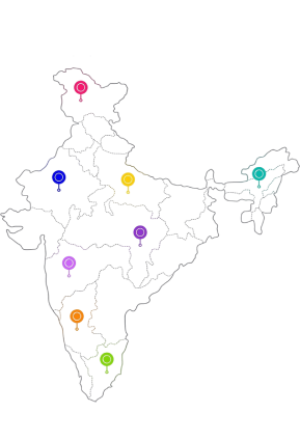
To streamline operations and facilitate various functions, all states and Union Territories in India, along with participating international countries, have been organized into the following zones. This categorization serves the following purposes:
Determining zone toppers for performance-based awards.
Delhi NCR, Haryana, Punjab, Himachal Pradesh, Uttarakhand, J&K, Ladakh, Chandigarh, Rajasthan, Uttar Pradesh
Maharashtra, Goa, Gujarat, Daman & Diu, Dadra & Nagar Haveli, Madhya Pradesh
West Bengal, Bihar, Jharkhand, Odisha, Assam, Arunachal Pradesh, Tripura, Sikkim, Meghalaya, Mizoram, Nagaland, Manipur, Chhattisgarh
Tamil Nadu, Karnataka, Kerala, Telangana, Puducherry, Lakshadweep, Andhra Pradesh, Andaman & Nicobar
All countries except India
Study Material
Recommendation & Books
OLYMPIAD EXCELLENCE GUIDE
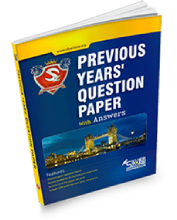
PREVIOUS YEAR PAPERS
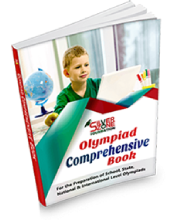
COMPREHENSIVE BOOK