

International Artificial Intelligence Olympiad 
"Artificial Intelligence is the science and engineering of making intelligent Machines.”
- John McCarthy


Edition
2nd
Class 1 to 10
About
International Artificial Intelligence Olympiad (iAIO)
Imagine sparking a love for AI in young minds! The International AI Olympiad by SilverZone is all about building those essential AI skills for students in Classes 1 to 10. It fuels curiosity, unleashes creativity, and sharpens computational thinking through fun, hands-on challenges. Perfectly in tune with global tech trends and India's NEP 2020 goals, this AI Olympiad turns learning into an exciting adventure for early learners.
Why Join the iAIO? Key Benefits for Students:
- Dive into real-world AI wonders, like smart assistants and healthcare innovations, while honing critical thinking and logic—superpowers for future STEM careers.
- Ignite curiosity and digital fluency that lasts a lifetime.
- Explore cool topics: machine learning, neural networks, coding basics, data handling, and even AI ethics.
- Gear up for higher studies, competitive exams, and an AI-driven world.
- Embrace project-based learning and thoughtful chats on ethical tech.
- Boost classroom smarts, nurture creativity, problem-solving, and leadership—all aligned with NEP 2020.
Participating in the SilverZone AI Olympiad doesn't just add to resumes; it prepares kids for tomorrow's tech landscape.
Key Features of the Olympiad:
- The International AI Olympiad is conducted in a single level (Level 1) and is open to all students from Classes 1 to 10 .
- Each class will receive a separate and class-specific question paper to ensure appropriate difficulty levels.
- All questions are objective-type (Multiple Choice Questions).
- There is no negative marking, encouraging students to attempt all questions confidently.
- The International AI Olympiad is conducted only in English to maintain a standardised assessment format and ensure clarity in technical terminology used across all classes.
The Olympiad is held once a year and is conducted during school hours to ensure student convenience and maximum participation. Each participating school can select one of the three proposed dates for conducting the Olympiad. All dates will have separate sets of question papers, ensuring exam integrity and flexibility in scheduling.
Test Paper Structure:
The question paper is grade-specific and consists of the following sections:
Section 1: AI
Section 2: Scholar’s Zone
The examination is being conducted for all classes from 1st to 10th with the following details.
- For Grades 1-5: There will be 30 questions, and the duration will be 40 Minutes.
- For Grades 6-8: There will be 35 questions, and the duration will be 40 Minutes.
- For Grades 9 - 10 : There will be 40 questions, and the duration will be 50 Minutes.
Detailed guidelines for conducting the test will be shared with the school along with the question papers. For grades 1st onwards, OMR answer sheets will be provided.
Registration Of Students:
The International AI Olympiad prospectus, along with registration forms, is sent to all schools currently registered with the SilverZone Foundation. Please note that the printed prospectus may not reflect the most recent updates. The latest information on syllabus, exam format, levels, and prizes is always available on our official website. We recommend referring to it for accuracy.
For New Schools:
Schools not yet registered with SilverZone may request a prospectus by writing to us at info@silverzone.org. Once received, schools must return the completed registration forms by the specified deadline.
Important Note For Schools:
- Any school can become a registered centre for the International AI Olympiad. There is no fee required to register the school itself.
- For smooth coordination and exam feasibility, a minimum of 40 students per school is required to register for the Olympiads.
- For any clarification regarding exam rules, syllabus, paper pattern, or registration process, schools may write to us directly at info@silverzone.org
Marking Scheme and Syllabus
The tentative chapter-wise marking Scheme will help students to perform better in SilverZone Olympiads. The actual marks distribution may differ depending on the prerogative of the authors/selectors/paper setters concerned.
Artificial Intelligence
Chapters
- Natural and Artificial Things
- Exploring Artificial Intelligence
- etting to Know Robots
Scholar’s Zone
Chapters
- Scholar’s Zone
Artificial Intelligence
Chapters
- The Amazing Journey of Computers
- Learning with Artificial Intelligence
- The World of Smart Robots
- Staying Safe and Kind Online
Scholar’s Zone
Chapters
- Scholar’s Zone
Artificial Intelligence
Chapters
- The Amazing Journey of Computers to AI
- Welcome to the World of Smart Machines!
- Talking to Machines
- Let’s Code with Scratch!
- AI is Everywhere!
- Being a Good AI Citizen
Scholar’s Zone
Chapters
- Scholar’s Zone
Artificial Intelligence
Chapters
- Evolution of AI
- Data: The Fuel for AI
- Different Types of AI
- Coding with Scratch: Create Your Own AI Game
- AI in the Digital World
- The Ethics of AI: Being a Good Digital Citizen
Scholar’s Zone
Chapters
- Scholar’s Zone
Artificial Intelligence
Chapters
- Deepening Our AI Knowledge
- Introduction to Machine Learning
- Data: The Magic Behind Machine Learning
- Basics of Neural Networks: How Machines Learn
- Machine Learning Project
- Myths and Facts of AI
- Being Responsible with AI
Scholar’s Zone
Chapters
- Scholar’s Zone
Artificial Intelligence
Chapters
- The World of AI: A New Adventure
- Python Programming: Getting Started
- Simple Machine Learning with Python
- Data and Visualization: Telling a Story with Numbers
- Neural Network and AI
- AI and the Internet of Things (IoT)
- Ethics & Safety in AI
Scholar’s Zone
- Scholar’s Zone
Artificial Intelligence
Chapters
- Python and AI Recap
- Data Handling for AI
- Introduction to Machine Learning Concepts
- Computer Vision: Teaching Machines to See
- Natural Language Processing (NLP) Made Simple
- AI in Everyday Life & Interactive Applications
- Ethics, Fairness & Digital Citizenship in AI
Scholar’s Zone
- Scholar’s Zone
Artificial Intelligence
Chapters
- Deep Learning
- Python for Deep Learning
- Advanced Computer Vision
- AI for Creativity: Art, Music & Storytelling
- Algorithmic Thinking & Problem Solving with AI
- AI for a Better World
- Ethics and Responsible AI in a Complex World
Scholar’s Zone
- Scholar’s Zone
Artificial Intelligence
Chapters
- Review & Brainstorm: AI in Our Lives
- Python for Building AI Applications
- Data Exploration and Visualization
- Neural Networks and Their Applications
- Advanced Image Recognition
- Creative AI: Merging Technology with Art
- AI Ethics and Social Impact
Scholar’s Zone
- Scholar’s Zone
Artificial Intelligence
Chapters
- Revisiting AI Project Cycle & Ethical Frameworks for AI
- Advanced Concepts of Modelling in AI
- Evaluating Models
- Statistical Data
- Computer Vision
- Natural Language Processing
Scholar’s Zone
- Scholar’s Zone
Raw Score Calculation
The raw score is computed by multiplying each correct answer by its corresponding base marks and summing the results. In mathematical terms: Raw Score = SUM (correct answer × subsequent base Marks).
Total Marks Calculation
Total Marks are determined by adding the raw score to the sum of the weightage of correct answers. Each question carries an additional weightage, starting from .0001 and increasing incrementally (.0002, .0003, and so forth). For instance, Question No. 1 has a weightage of .0001, Question No. 2 has .0002, and so on. This weightage is utilized to resolve ties when calculating Class/Zonal/Olympiads ranks.
Rank Structure:
Class Rank
This encompasses all students from various sections/divisions of the same class within the same school.
Olympiad Rank
This encompasses all students from India and abroad belonging to the same class.
Important Notes:
Each winner is entitled to one award per exam, receiving the higher-level award only. For example, international top three rank holders will receive awards based on their international ranks, and any awards based on their Zonal ranks will be passed to the next rank holder. Similarly, if a Zonal award winner also qualifies for a class award, the class award will be given to the next rank holder.
Sample Papers
Sample Question Papers
The detailed Syllabus and Sample Test Paper are provided in this website, click the following links to download the Syllabus and Sample Test Paper class wise. For Books please contact, School Coordinator or book your order online now.
Prizes
International Olympiad
Rank Awards

1st Olympiad rank
The 1st International Olympiad rank holder in each class will receive a Prize of
10,000/-.
2nd Olympiad rank
The 2nd International Olympiad rank holder in each class will receive a Prize of
7,500/-.

3rd Olympiad rank
The 3rd International Olympiad rank holder in each class will receive a Prize of
5000/-.
Zonal Categorisation
Zone/State Categorisation
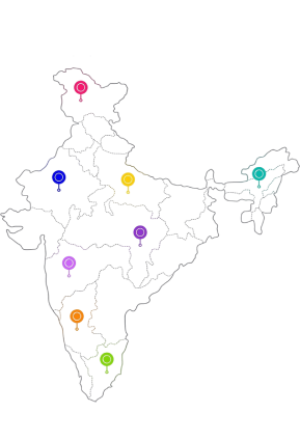
To streamline operations and facilitate various functions, all states and Union Territories in India, along with participating international countries, have been organized into the following zones. This categorization serves the following purposes:
Determining zone toppers for performance-based awards.
Delhi NCR, Haryana, Punjab, Himachal Pradesh, Uttarakhand, J&K, Ladakh, Chandigarh, Rajasthan, Uttar Pradesh
Maharashtra, Goa, Gujarat, Daman & Diu, Dadra & Nagar Haveli, Madhya Pradesh
West Bengal, Bihar, Jharkhand, Odisha, Assam, Arunachal Pradesh, Tripura, Sikkim, Meghalaya, Mizoram, Nagaland, Manipur, Chhattisgarh
Tamil Nadu, Karnataka, Kerala, Telangana, Puducherry, Lakshadweep, Andhra Pradesh, Andaman & Nicobar
All countries except India
Study Material
Recommendation & Books
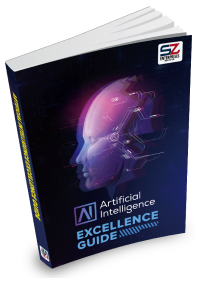
OLYMPIAD EXCELLENCE GUIDE
The AI Excellence Guide is a thoughtfully designed book for young learners who enjoy hands-on learning, exploration, and creativity. It supports skill-building and concept clarity through a variety of engaging and educational tools.
Special Features of this book:-
- Concise Topic Sections
- Chapter Summary
- Practice MCQs After Every Concept
- MCQ Quiz at the End of Each Chapter
- 8 Model Papers at the End
- Fun Facts
- Activity Section
- Colourful Diagrams and Real-World Examples,
- Aligned with NEP 2020 Goals